


Introduction
A 3-point sprayer is an indispensable tool for farmers, orchard owners, and agricultural contractors. It provides precise application of herbicides, pesticides, and fertilizers, saving time and reducing waste. With so many sizes, features, and configurations available, selecting the right sprayer can seem daunting. This guide simplifies the decision-making process, helping you choose the best sprayer for your needs. Whether you’re managing 5 acres or 50, you’ll find practical tips and valuable insights to optimize your spraying operations.
Who is This Guide For?
This guide is designed for:
- Farmers: Managing large fields and seeking efficient spraying solutions.
- Orchard and Vineyard Owners: Requiring precision spraying in tight or uneven rows.
- Contractors: Offering spraying services across varied terrains and crops.

If you face challenges like uneven coverage, wasted chemicals, or compatibility issues with your equipment, this guide will help you find the right solutions.
What is a 3-Point Sprayer?
A 3-point sprayer is a tractor-mounted device that connects to the three-point hitch. It provides a stable and versatile platform for spraying chemicals evenly across fields. These sprayers are ideal for tasks ranging from weed control in row crops to fertilizing orchards and vineyards.
Key Features
- Three-Point Hitch System: Ensures stability and allows for easy attachment and detachment.
- Boom Options: Can be configured with booms for large coverage or boomless systems for tight or obstacle-filled areas.
- Compatibility: Works seamlessly with most modern tractors, provided the capacity matches.

Why Choose a 3-Point Sprayer?
- Precision: Even application reduces chemical waste and enhances crop protection.
- Efficiency: Covers larger areas in fewer passes, saving time and fuel.
- Versatility: Suitable for different crops, terrains, and spraying needs.
Tank Capacity and Tractor Compatibility
The size of the tank you choose directly impacts how efficiently you can manage your fields. Here’s how to decide:
Tank Capacities
- 25-55 Gallons: Ideal for smaller fields or spot spraying, these tanks work well with compact tractors like the Kubota B2650.
- 100 Gallons: Best for medium to large fields, offering coverage for 5-10 acres per fill with standard application rates (10-20 gallons per acre).
Tractor Requirements
- Ensure your tractor has a lifting capacity of at least 1,000 lbs for 100-gallon tanks. For smaller tanks, a lifting capacity of 500-700 lbs is sufficient.
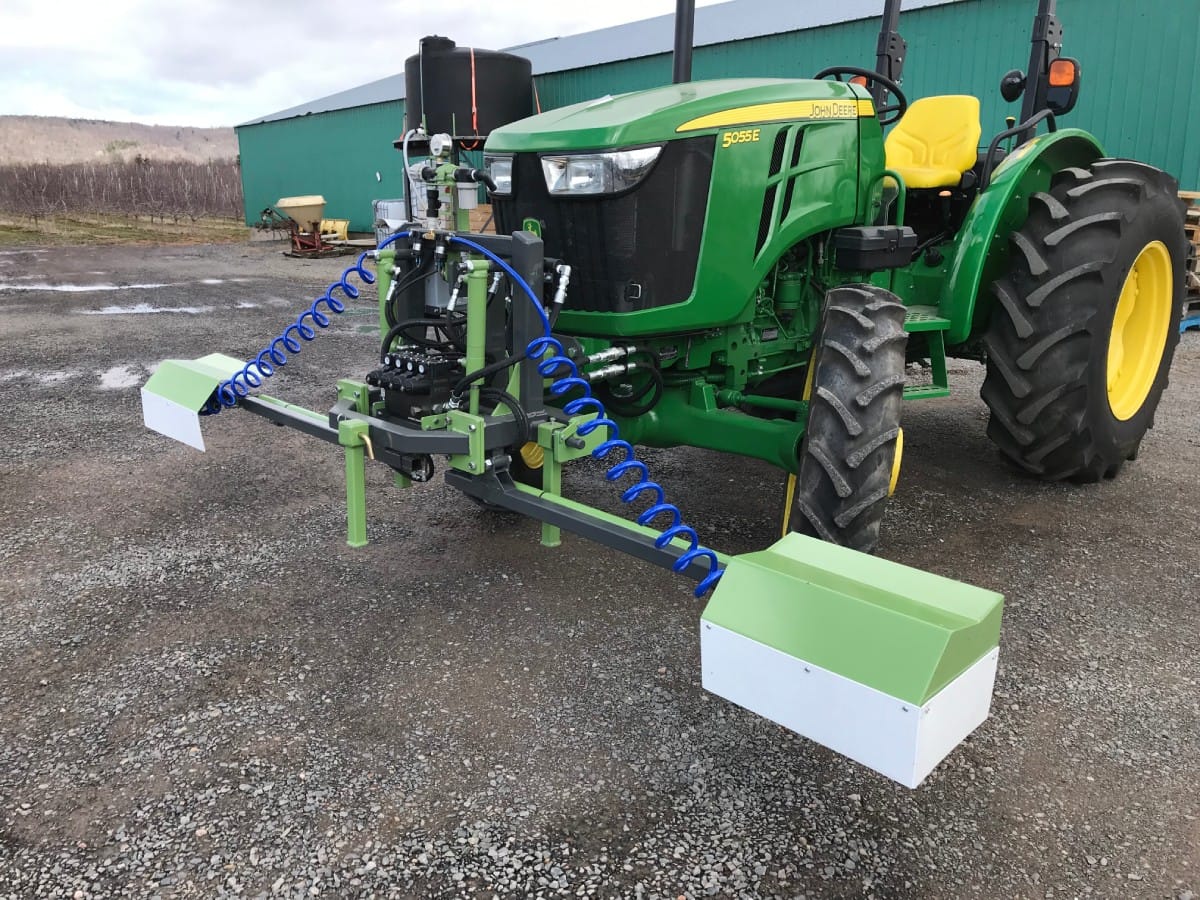
Pro Tip: Check your tractor’s three-point hitch specifications to confirm compatibility. For instance, a John Deere 5055E can handle 100-gallon sprayers effortlessly, while smaller models may require adjustments or ballast weights for stability.
Spray Application Rates
Understanding your sprayer’s application rate is essential to maximize efficiency:
- Standard rates range from 10-20 gallons per acre.
- For a 100-gallon tank, expect to cover 5-10 acres per fill depending on terrain and crop type.
Calibration Tip: Measure the gallons used over a set distance to calculate the exact application rate for your needs.
Boom Width Options
Choosing the Right Boom
- 12-Foot Boom: Balanced coverage for mid-sized fields.
- 20-Foot Boom: Efficient for large open fields, reducing the number of passes needed.
- Boomless Sprayers: Perfect for rugged terrain, allowing broad spray patterns without risking damage to booms.
Pro Tip: For uneven terrain, use auto-leveling booms to maintain consistent spray coverage across slopes.
How to Choose the Right 3-Point Sprayer
Step 1: Identify Your Needs
- Determine the size of your field, type of crop, and the chemicals you’ll apply.
- For orchards or vineyards, consider narrow-row compatibility with adjustable booms.
Step 2: Evaluate Advanced Features
- Look for GPS systems for precise coverage.
- Choose sprayers with foam markers to avoid overlaps and missed spots.
Step 3: Match Your Tractor
- Smaller tractors can handle 25-55 gallon tanks, while medium-sized models are better for 100-gallon sprayers.

Related Reading: How to Choose the Best Sprayer for Your Tractor.
Maintenance Tips for Longevity
Regular maintenance ensures your sprayer operates efficiently:
- Tank Cleaning: Rinse thoroughly after each use to prevent residue buildup.
- Nozzle Care: Inspect nozzles regularly and clear any clogs.
- Pump Maintenance: For PTO-driven sprayers, grease fittings and inspect seals to avoid leaks.
- Storage: Store in a cool, dry place to protect against weather damage.
Real-Life Example: The Herbicider
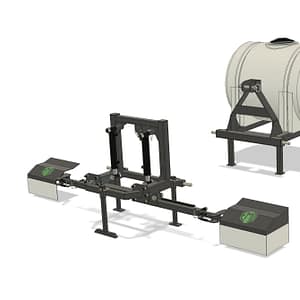
The Herbicider, a cutting-edge 3-point sprayer by Eastern Manufacturing, is designed for efficient weed control. Its features include auto-leveling booms and advanced chemical-saving technology. Learn more about the Herbicider.
Pros and Cons of 3-Point Sprayers
| Pros | Cons |
| Covers large areas efficiently. | Higher upfront cost for larger tanks. |
| Reduces chemical waste with precise application. | Heavy models may need ballast for smaller tractors. |
| Compatible with various crops and terrains. | Requires careful calibration for optimal performance. |
Common Mistakes to Avoid
- Mismatched Tank Size and Tractor:
- Overloading your tractor with an incompatible tank can lead to instability.
- Always check lifting capacity before purchasing.
- Skipping Calibration:
- Failing to calibrate your sprayer results in uneven application and wasted chemicals.
- Ignoring Maintenance:
- Residue buildup in tanks or nozzles can reduce efficiency and shorten the lifespan of your equipment.
Conclusion
A 3-point sprayer is a valuable investment for efficient and precise spraying. By understanding your needs, matching the sprayer to your tractor, and leveraging advanced features, you can optimize your spraying operations and reduce waste.
Call-to-Action
Ready to find the perfect 3-point sprayer? Explore Eastern Manufacturing’s customizable options designed for reliability and performance.


0 Comments