


Preventing herbicide overspray is crucial for protecting crops and maintaining environmental health. Controlling weeds along fence lines can be challenging, especially when trying to avoid unintended damage to fruit trees or nearby vegetation. These seven practical tips will help orchard managers prevent overspray while ensuring precise application.
How to Prevent Overspray
1. Use Drift-Reducing Nozzles for Targeted Application
Drift-reducing nozzles are highly effective for controlling herbicide drift. These nozzles produce larger droplets that are less likely to be carried away by the wind. Research from Sprayers101 shows that air induction nozzles can reduce drift-prone droplets by up to 90% compared to standard options.
For orchard managers near sensitive vegetation, these nozzles ensure herbicides stay on target. They also reduce waste, save costs, and improve efficiency. Upgrading to drift-reducing nozzles is a simple yet impactful way to improve spraying precision and protect your orchard.
Related Reading: Learn more about sprayer calibration and how to ensure accurate application through regular maintenance in this Herbicide Sprayer Maintenance & Cleaning Guide.

2. Adjust Boom Angles to Protect Tree Canopies
The height and angle of your sprayer’s boom play a critical role in herbicide application. Raising the boom too high significantly increases drift potential. According to Sprayers101, lifting the boom from 20 inches to 40 inches can increase drift by 350% at 90 feet downwind.
Keeping the boom as low as possible while maintaining effective coverage minimizes this risk. Tilting the boom downward improves accuracy, especially when spraying along fence lines or the orchard floor. This adjustment protects fruit-bearing branches from unintended exposure and ensures even coverage at the tree base.

Related Reading: For additional tips on boom sprayer calibration and ensuring precise application, check out this detailed guide on How to Calibrate Boom Sprayers.
3. Use Shielded Sprayers to Prevent Drift
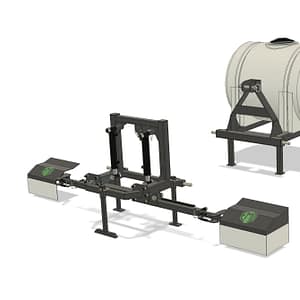
Shielded sprayers are designed to keep herbicides within a specific area, reducing drift caused by wind or spray misdirection. Protective barriers ensure the herbicide stays where it’s needed, even in windy conditions.
Studies on Sprayers101 show that shielded sprayers can reduce drift by 50-70%, depending on wind speed and other factors. For orchard managers, shielded sprayers provide precise application, protect nearby crops, and minimize environmental impact.

Related Reading: Check out the Herbicide Sprayer for advanced sprayer features designed to enhance spraying efficiency and precision.
4. Choose Selective Herbicides to Safeguard Fruit Trees
Selective herbicides are specifically formulated to target weeds without harming non-target plants like grasses or fruit trees. For instance, 2,4-D controls broadleaf weeds while leaving grasses intact, making it an excellent choice for orchards.
While non-selective herbicides are ideal for clearing unplanted areas, selective options allow orchard managers to manage weeds without risking damage to surrounding vegetation. Always check the product label to confirm compatibility with your orchard’s requirements.
5. Monitor Weather Conditions to Minimize Spray Drift
Weather conditions significantly impact herbicide application. High winds (over 10 km/h) increase the chance of spray drifting away from the target area. Early mornings or late afternoons, when winds are typically calmer and humidity is higher, are the best times to spray.
Humidity helps droplets adhere to plants, reducing evaporation and drift. In contrast, hot, dry conditions increase the likelihood of spray vaporizing and drifting. Monitoring weather conditions before spraying ensures herbicide reaches its target effectively, improving accuracy and reducing waste.

6. Maintain Equipment for Consistent and Accurate Coverage
Well-maintained equipment is essential for effective herbicide application. Regularly inspect nozzles, hoses, and filters to ensure they’re functioning properly. Clogged nozzles can produce uneven spray patterns, while cracked hoses might result in leaks that waste product and reduce precision.
Cleaning filters and replacing worn parts before each use ensures consistent application and extends your equipment’s lifespan. Prioritizing maintenance not only protects your crops but also lowers long-term costs by keeping equipment in excellent condition.
Related Reading: Learn how to maintain and clean your sprayer with this Herbicide Sprayer Maintenance Guide.
7. Provide Operator Training for Safe and Effective Practices
Properly trained operators are essential for minimizing herbicide overspray. Training should include techniques for adjusting equipment, monitoring weather conditions, and using specialized attachments.
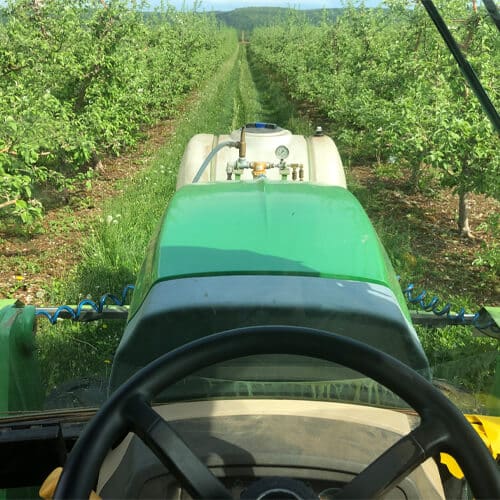
For example, wand attachments on 3-point sprayers allow operators to target weeds precisely along fence lines. A user on the Green Tractor Talk forum shared, “I also like the wand attachment that comes with it… I can drive down a fence line and spot spray on the other side.” Teaching operators to use tools like this ensures herbicides are applied accurately and reduces drift risks.

Conclusion
Preventing herbicide overspray in orchards requires the right tools, techniques, and awareness of weather conditions. By adopting strategies like using drift-reducing nozzles, adjusting boom angles, and monitoring weather, you can protect your crops, reduce waste, and improve orchard productivity. Proper training, regular equipment maintenance, and shielded sprayers ensure precision and sustainability. Start implementing these tips today for healthier, more productive orchards.
What’s Your Next Step?
Which of these tips will you implement first to improve your spraying practices? Share your thoughts and experiences in the comments below!
Upgrade Your Spraying Equipment
For reliable spraying equipment that enhances precision and reduces overspray, consider 3-Point Sprayers for Tractors from Eastern Manufacturing. These sprayers are designed with adjustable shields and precise nozzles, making them an excellent choice for orchard managers.
1. How do I know if my sprayer is calibrated correctly?
Ensuring your sprayer is calibrated properly is essential for accurate herbicide application. To check calibration, start by calculating your sprayer’s speed and spraying rate. This involves measuring the time it takes to cover a known distance and adjusting the flow rate to match the manufacturer’s recommendations.
Perform a water test by filling the sprayer with water and spraying over a predetermined area. Then, calculate the amount of water used and compare it to the ideal application rate for your orchard. If the numbers don’t align, recalibrate by adjusting nozzle sizes, pressure, or speed. Regular calibration ensures herbicides are applied consistently, reducing overspray and ensuring the correct amount is used for optimal results.
Related Reading: For additional tips on boom sprayer calibration and ensuring precise application, check out this detailed guide on How to Calibrate Boom Sprayers.
2. Can herbicide overspray harm beneficial insects in my orchard?
Yes, herbicide overspray can harm beneficial insects, such as pollinators, predators, and parasitoids that help control pests naturally. To prevent this, it’s important to apply herbicides during periods when beneficial insects are less active, typically early in the morning or late in the afternoon.
Additionally, using selective herbicides that target specific weeds without harming other organisms can help reduce negative impacts. Implementing drift-reducing measures like shielded sprayers or drift-reducing nozzles will also help keep the herbicide focused on the intended area, protecting the surrounding ecosystem.
3. How can I reduce herbicide drift when spraying in windy conditions?
Windy conditions can significantly increase the risk of herbicide drift, causing the spray to move beyond the target area and affect non-target plants or nearby ecosystems. To reduce drift in windy conditions, consider the following strategies:
- Use drift-reducing nozzles that produce larger droplets, which are less prone to wind dispersion.
- Spray when winds are calm, ideally in the early morning or late afternoon when wind speeds are lower.
- Lower the boom as much as possible to reduce the distance the spray travels through the air.
- Use shielded sprayers or shields that block wind and confine the spray to the target area.
Implementing these measures will help keep herbicides on target and minimize environmental impact.
4. What are the best herbicides for orchards with minimal impact on surrounding vegetation?
Selective herbicides are the best option for orchards because they target specific weeds while leaving surrounding vegetation unharmed. For broadleaf weed control without affecting grasses, herbicides like 2,4-D or glyphosate-based products (applied with caution) are effective options. Always look for herbicides specifically labeled for use in orchards to ensure minimal impact on fruit trees and surrounding plants. Additionally, consider spot treatments with wands or targeted spraying methods to avoid unnecessary exposure to desirable plants. Always read the product label to verify its suitability for your orchard’s needs.
5. How can I train my operators to reduce herbicide overspray?
Training your operators is crucial for reducing herbicide overspray and ensuring safe and efficient application. Start by providing comprehensive training on the following:
- Proper equipment calibration: Teach operators how to check and adjust sprayers for accurate application.
- Understanding wind and weather conditions: Instruct operators on how to monitor weather and adjust spraying times to avoid conditions that increase drift (e.g., spraying on windy days).
- Using equipment effectively: Train operators on adjusting boom heights, using shielded sprayers, and selecting the right nozzles for different conditions.
- Spot spraying techniques: Equip operators with the knowledge to use wand attachments for precise, targeted spraying along fence lines or areas with weeds.
- Safety protocols: Ensure operators are familiar with personal protective equipment (PPE) and safety measures during herbicide application.
Regular refresher training ensures operators remain up-to-date with best practices and equipment handling, improving both safety and herbicide application efficiency.


0 Comments