


Applying herbicides at the right time can make the difference between excellent weed control and a disappointing application. Many herbicide failures aren’t caused by the product itself but by poor weather conditions during or shortly after spraying.
Understanding the best time to spray herbicide helps improve weed control, reduce chemical waste, and minimize spray drift. Temperature, wind, humidity, rainfall, and even the time of day all influence how effectively herbicides work.
In this guide, we’ll explain the key weather factors that affect herbicide performance and how to choose the best conditions for spraying.
Why Herbicide Application Timing Matters
Successful weed control depends on more than selecting the right product. Proper herbicide application timing ensures the chemical reaches the target plant, remains on the leaf surface long enough for absorption, and avoids being washed away or carried off-target.
Even a properly calibrated sprayer can deliver poor results if conditions aren’t suitable.
Choosing the right spraying window can help:
- Improve herbicide absorption
- Reduce chemical waste
- Minimize spray drift
- Increase weed control effectiveness
- Protect nearby crops and vegetation
The Best Time to Spray Herbicide
For most herbicides, the best conditions include:
- Temperatures between 15°C and 25°C (60°F to 77°F)
- Light wind speeds between 3 and 10 km/h
- Moderate humidity levels
- No rainfall expected for several hours after application
- Actively growing weeds
In many regions, early morning and late afternoon often provide the best combination of these conditions.

Wind and Herbicide Spray Drift
One of the biggest challenges during spraying is herbicide spray drift.
Drift occurs when spray droplets move away from the target area due to wind. This can reduce weed control effectiveness and potentially damage nearby crops, trees, gardens, or environmentally sensitive areas.
Most applicators avoid spraying when wind speeds exceed 15 km/h (10 mph), although specific recommendations vary by product label.
Even light winds can create problems if droplet size, boom height, or pressure settings are not adjusted correctly.
Temperature and Herbicide Performance
Temperature has a significant impact on herbicide effectiveness.
Many products perform best when weeds are actively growing. Moderate temperatures encourage plant growth and increase herbicide uptake.
Spraying Weeds in Hot Weather
Spraying weeds in hot weather can create several challenges.
High temperatures increase evaporation, causing smaller droplets to disappear before reaching the target. Some herbicides can also become more volatile during hot conditions, increasing the risk of off-target movement.
Many applicators avoid spraying when temperatures exceed 30°C (86°F), especially during the hottest part of the day.
Spraying Weeds in Cold Weather
Spraying weeds in cold weather can also reduce effectiveness.
When temperatures drop, weed growth slows and plants absorb herbicides more slowly. As a result, even a properly applied herbicide may provide weaker control.
If overnight temperatures are near freezing, consider delaying application until warmer conditions return.

Humidity and Herbicide Absorption
Humidity affects how quickly spray droplets evaporate.
Low humidity speeds up evaporation, which can reduce coverage and increase drift potential. Higher humidity typically allows droplets to remain on leaf surfaces longer, improving absorption.
This is one reason many growers find that early morning applications often perform better than mid-afternoon spraying.
Combined with proper nozzle selection and pressure settings, favorable humidity levels can significantly improve herbicide performance.
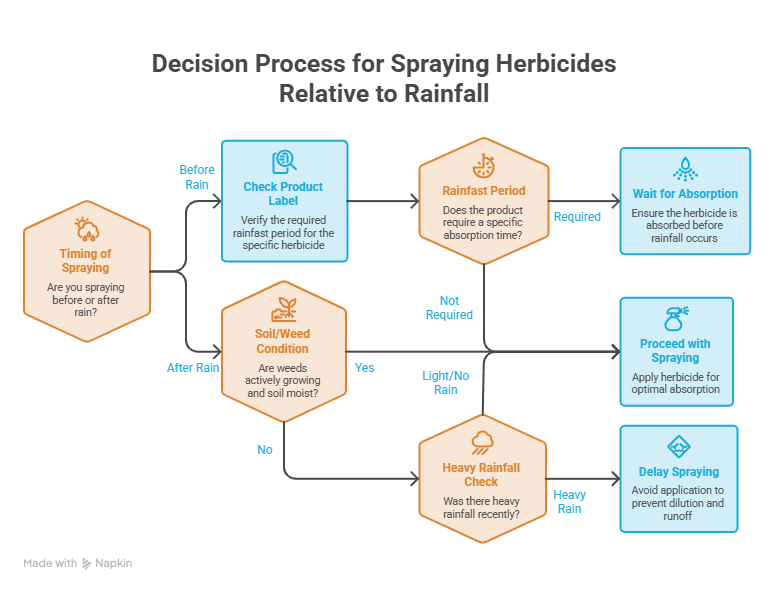
Should You Spray Before Rain?
One of the most common questions growers ask is whether it’s safe to spray before rainfall.
The answer depends on the herbicide.
Many products require a “rainfast” period after application. This is the amount of time needed for the herbicide to be absorbed into the plant.
Some herbicides become rainfast within one hour, while others may require six hours or more.
Always check the product label before spraying.
Spraying After Rain
In some cases, spraying after rain can actually improve results.
Moist soil and actively growing weeds often absorb herbicides more effectively than drought-stressed plants. However, avoid spraying immediately after heavy rainfall if excessive moisture may dilute the product or create runoff concerns.
Best Weather for Spraying Weeds
When considering the overall best weather for spraying weeds, the goal is to find conditions that maximize absorption while minimizing drift.
Ideal conditions typically include:
- Mild temperatures
- Low to moderate wind
- Moderate humidity
- Dry foliage
- No immediate rain forecast
- Healthy, actively growing weeds
When these factors align, herbicides generally perform at their highest potential.
Equipment Setup Still Matters
Even when weather conditions are ideal, equipment setup plays a major role in application quality.
Incorrect pressure, worn nozzles, poor calibration, or excessive ground speed can all reduce effectiveness.
To improve application accuracy, review:
- Boom Height Sprayer Tips
- Tips to Prevent Overspray
- How to Calibrate a Boom Sprayer
- The Most Common Sprayer Operator Mistakes
These adjustments work together with proper weather conditions to improve weed control results.
Final Thoughts
Understanding the best time to spray herbicide can help you achieve better weed control while reducing waste and minimizing drift.
Pay close attention to temperature, wind, humidity, and rainfall forecasts before heading to the field. Combining favorable weather conditions with proper equipment setup gives herbicides the best chance to perform as intended.
Small adjustments in timing often produce better results than increasing application rates or making additional passes later in the season.
Upgrade Your Spraying Equipment
Getting the timing right is only part of effective herbicide application. Reliable equipment helps ensure every application is accurate and consistent.
At Eastern Manufacturing & Design, we build durable orchard and field sprayers designed to improve coverage, reduce waste, and help growers work more efficiently.
👉 Explore our line of 3-point sprayers and spraying equipment to find the right solution for your operation.


0 Comments