


Choosing the right tractor size for a 3-point sprayer is essential for safe operation, efficient spraying, and long-term equipment performance.
If your tractor is too small, it may struggle to lift the sprayer or maintain stability. If it’s too large, you might end up paying more for fuel and equipment than you actually need.
Whether you’re managing a small orchard or spraying large fields, understanding tractor compatibility helps ensure smooth operation and accurate herbicide application.
Just like pairing a trailer with the right truck, the setup works best when everything is properly sized. In this guide, we’ll explain how tractor horsepower, lifting capacity, and hitch compatibility affect your sprayer setup.
Tractor Size and 3-Point Sprayers
A 3-point sprayer attaches directly to a tractor’s hitch system and relies on the tractor’s power and hydraulics to operate effectively. Because the sprayer rides on the tractor itself (rather than being pulled behind), the tractor needs to comfortably handle both the weight and the workload.
Choosing the right tractor size for a 3-point sprayer is all about ensuring the sprayer can be lifted safely, operate efficiently, and maintain stability across different terrain.
For example, when everything is balanced correctly, you’ll notice smoother driving, more even spray patterns, and fewer equipment issues during long spraying days.
On the other hand, an undersized tractor may struggle to lift a full tank or maintain balance, especially when operating on slopes or rough fields. This leads to inefficiency, but even more importantly, an increased risk of rollovers or other accidents.

If you’re still choosing equipment, see 3-Point Sprayer Buyer’s Guide: Choosing the Right Boom Sprayer for Optimal Results for a full equipment selection guide.
Key Factors That Determine Tractor Size
Several factors determine the ideal tractor size for a 3-point sprayer. Understanding these basics can save you a lot of frustration later… especially when you’re in the middle of spraying season and equipment problems slow you down.
- Tractor Horsepower Requirements
Horsepower determines how well your tractor can power the sprayer pump and maintain steady operation during spraying.
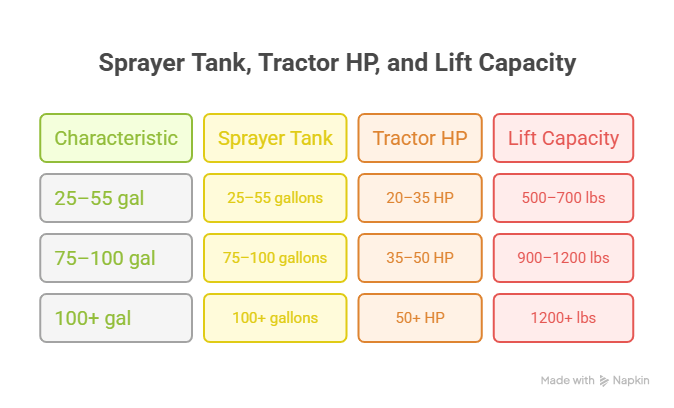
For most PTO-driven sprayers, the general guidelines are:
| Tank Size | Recommended Tractor Horsepower |
| 25–55 Gallon Sprayer | 20–35 HP |
| 75–100 Gallon Sprayer | 35–50 HP |
| 100+ Gallon Sprayer | 50+ HP |
It’s common sense: the bigger the tank, the harder your tractor has to work to keep everything running smoothly.
For example, many compact tractors used in orchards fall within the 30–50 HP range, which is ideal for most mid-sized sprayers.
- 3-Point Hitch Lifting Capacity
While horsepower is important, lifting capacity is often the most critical factor.
A tractor’s hitch must be able to safely lift:
- the empty sprayer
- the liquid inside the tank
- additional components like pumps, booms, and frames
For example:
- 50-gallon sprayer: approximately 450–600 lbs when full
- 100-gallon sprayer: approximately 900–1,200 lbs when full
That weight can add up quickly once the tank is filled with water or chemicals. Many farmers are surprised by how heavy a “small” sprayer can become once it’s full.
A safe rule is that your tractor’s lift capacity should exceed the fully loaded sprayer weight by at least 20–30%.
This safety margin helps prevent strain on the hydraulics and keeps the tractor stable while you’re driving across the field.
Proper equipment setup also makes mounting easier and safer. For a detailed guide on installation, see 7 Expert Tips to Mount and Unmount a 3-Point Sprayer Safely and Efficiently.
- Tractor Hitch Category
3-point sprayers are designed to work with standard tractor hitch categories.
The most common categories include:
Category I
- Found on compact and utility tractors
- Handles lighter equipment
- Common for small orchards and hobby farms
Category II
- Used on larger agricultural tractors
- Supports heavier equipment
- Ideal for larger sprayers

Most orchard sprayers are designed for Category I hitches, which are common on tractors between 20–60 horsepower. If you own a compact or mid-size tractor, chances are you’re already working with a Category I hitch.
- Weight Distribution and Stability
When a sprayer tank is full, it adds significant weight behind the tractor. This extra weight acts almost like a counterbalance hanging off the back of the machine. It affects traction and stability.
If the tractor is too small, the front wheels may lift slightly when carrying a full sprayer. If the steering feels lighter than usual, this is a warning sign for your weight distribution.
To prevent this issue, farmers often add:
- front ballast weights
- wheel weights
- proper tire inflation
Maintaining balanced weight distribution ensures safe operation and prevents unnecessary wear on the tractor.
Learn more about equipment stability in Front Mount vs. Rear Mount Sprayers: Which One is Right for You?
Matching Sprayer Size to Your Farm
Choosing the right tractor also depends on your field size and spraying needs. A small orchard doesn’t need the same setup as a large row-crop farm, so it’s important to size your equipment to the job.
Here are general recommendations based on common farm sizes.
Small Farms and Orchards (Under 10 Acres)
Recommended setup:
- Tractor: 20–35 HP
- Sprayer tank: 25–55 gallons
These setups are ideal for spot spraying, fence line control, and small orchard management. They’re also easier to maneuver in tight spaces like orchards or vineyards.
Medium Farms (10–40 Acres)
Recommended setup:
- Tractor: 35–50 HP
- Sprayer tank: 75–100 gallons
This size provides a balance between coverage and maneuverability.
Large Farms (40+ Acres)
Recommended setup:
- Tractor: 50+ HP
- Sprayer tank: 100 gallons or more
Larger setups reduce refill time and allow operators to cover more ground efficiently. For larger properties, fewer refills can make a big difference in how long spraying takes.
Signs Your Tractor May Be Too Small for Your Sprayer
If your tractor struggles with a sprayer out in the field, you may notice several warning signs.
Common indicators include:
- Difficulty lifting the sprayer when the tank is full
- Reduced steering control
- Front wheels lifting off the ground
- Poor traction on slopes
- Hydraulic system strain
Ignoring these warning signs can lead to equipment damage or unsafe operating conditions.
Tips for Choosing the Right Tractor and Sprayer Combination
Before purchasing a sprayer, keep these practical tips in mind:
Check your tractor’s manual
Always verify lift capacity and hitch category specifications.
Consider terrain conditions
Hilly terrain may require additional horsepower and ballast for stability.
Account for liquid weight
Water and herbicides add significant weight when the tank is full.
Plan for future expansion
Choosing a slightly larger tractor allows you to upgrade equipment later.
Test equipment compatibility
If possible, test the sprayer on your tractor before purchase.
Once your tractor and sprayer are properly matched, the next step is ensuring accurate chemical application. Proper calibration is essential, which we explain in How to Calibrate a Boom Sprayer: A Step-by-Step Guide.
Closing Thoughts
At Eastern, we know that selecting the right tractor size for a 3-point sprayer is essential for safe operation and efficient spraying. When you consider horsepower, lifting capacity, hitch compatibility, and field size, you can ensure your equipment works together smoothly.
When the tractor and sprayer are sized correctly, the entire job becomes easier, safer, and more efficient.
If you’re planning to upgrade your spraying setup, choosing equipment designed for reliability and compatibility will help keep your operations running efficiently.
If you want the benefit of our experience, contact us today!
FAQ
1. Can a small tractor run a 3-point sprayer?
Yes, many compact tractors can operate smaller sprayers. Tractors with 20–35 horsepower are typically capable of running sprayers with tanks between 25 and 55 gallons.
2. How heavy is a full 100-gallon sprayer?
A 100-gallon tank can weigh 800–1,200 pounds when filled, depending on the equipment and additional components like pumps or boom arms.
3. Do I need PTO power for a 3-point sprayer?
Many agricultural sprayers use PTO-driven pumps, which rely on the tractor’s power take-off system. PTO pumps provide strong and consistent pressure for spraying large areas.
4. Can I use a 3-point sprayer on uneven terrain?
Yes, but stability becomes more important on uneven ground. Using the correct tractor size, maintaining proper ballast, and operating at safe speeds will improve safety.
5. What happens if I have the wrong tractor size for a 3-point sprayer?
An undersized tractor may struggle to lift the sprayer, lose stability, or strain its hydraulic system. This can lead to unsafe operation and increased equipment wear.


0 Comments