

Buying your first fruit bin trailer can be exciting — but it’s also easy to make costly errors. Many growers enter the market without fully understanding specs, terrain needs, or tractor limits, leading to common bin trailer buying mistakes that disrupt harvest flow.
Whether you grow apples, pears, or plums, your entire setup depends on getting the right trailer — not just one that’s “good enough.”
1. Choosing Based on Price Alone
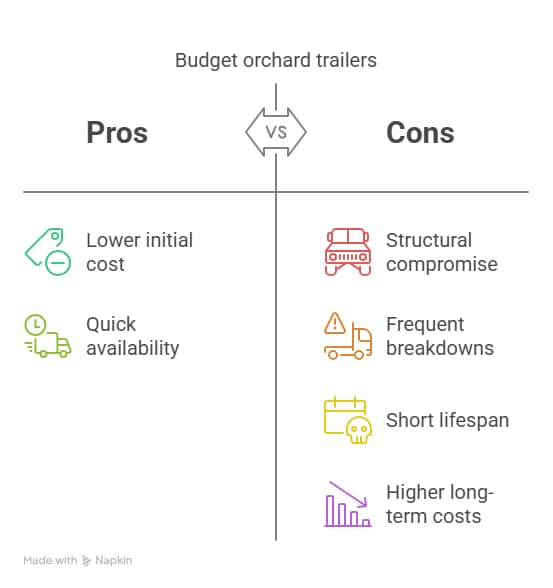
This is one of the most frequent bin trailer buying mistakes. It’s tempting to go for the lowest price when balancing multiple equipment investments, but budget orchard trailers often compromise on structural integrity — lighter frames, weaker axles, or subpar bin supports.
A cheap trailer today can lead to downtime, damage, and added costs during your busiest weeks.
Keep in mind: A well-built trailer that lasts 5–10 years without regular breakdowns offers far more value than a budget option that fails after one season.
2. Ignoring Orchard Terrain
Not all orchards are created equal. Flat rows, tight headlands, slopes, and muddy ground all place different demands on your trailer. Failing to match your trailer design to real-world terrain is one of the top common mistakes when buying orchard bin trailers.
Good rule of thumb: Walk your rows before ordering. Note clearance needs, turning radius, and how wet or soft the soil becomes at peak harvest. These details make a big difference in day-to-day usability.
Suspension matters too. According to Fresh Quarterly, basic bin trailers can cause over 200 significant impacts per kilometer, while upgraded suspension systems reduce it to just 20 — greatly minimizing bruising.
Source → Fresh Quarterly
Trailer tire pressure also matters more than you think. Industry best practices recommend 2–3 bar to help absorb shocks and protect fruit.
Source → Hortgro PDF
3. Overestimating Tractor Power
Just because a tractor can move a trailer doesn’t mean it should. Six full bins and a slope put far more strain on your machinery than many expect — especially if braking, traction, or PTO specs are borderline.
This often becomes one of the most frustrating apple bin trailer and tractor compatibility mistakes for new buyers.
Watch for this: Know your tractor’s limits. If your towing or braking capacity is close to max, either size down your trailer or plan for smaller hauls on steep ground.

4. Underestimating Daily Volume Needs
Many new buyers go with 2-bin setups to “keep it simple.” But during a high-yield harvest, this leads to fruit bin trailer capacity mistakes that slow down every row and force more trips than necessary.
Keep in mind: You’re planning for your busiest harvest days — not average ones.
Wondering whether to go with a 2-bin or 6-bin orchard trailer?
Ask yourself: how many pickers do you have? How long are your rows? What’s your average load per day?

5. Skipping Unloading System Planning
Loading your trailer is just one part of the workflow — unloading is where many setups fail. First-time buyers often forget to match their trailer with the unloading setup at the packhouse or storage area. This can cause real bottlenecks, especially during crunch time.
This is a key part of what to know before buying your first fruit bin trailer — and one of the easiest to overlook.
Tip: Map out your unloading flow before you commit. Hydraulic tilt, forklift access, or simple ramps each have different space and labor needs. Choose based on your equipment, space, and team.
Final Thoughts
A great fruit bin trailer supports your harvest flow, protects your fruit, and reduces stress in the field. By avoiding these common bin trailer buying mistakes, you’ll set yourself up for fewer interruptions and a faster, cleaner harvest.
At Eastern Manufacturing & Design, we build orchard trailers made for Nova Scotia terrain — tough, simple, and built to move.
👉 Check out our Apple Bin Trailer to see what reliable equipment looks like in real-world conditions.
FAQ: Common Mistakes When Buying Orchard Bin Trailers
1. Can I use a general-purpose trailer instead of a bin-specific one?
No — using a regular utility or flatbed trailer often leads to bin shifting, damage to fruit, and longer loading times.
Fruit bin trailers are designed specifically to cradle bins, minimize bruising, and keep the harvest moving efficiently.
2. Is it okay to skip the tilt feature to save money?
Tilt features aren’t just a luxury — they can significantly speed up unloading and reduce manual handling strain.
If your packhouse setup allows it, investing in a hydraulic or manual tilt system can save time and labor long-term.
3. How do I know if my trailer matches my tractor’s capabilities?
Always check the trailer’s weight rating fully loaded — not just empty.
Compare that against your tractor’s towing and braking specs, especially on hilly ground or in wet conditions.
Undersized tractors may struggle with traction, braking, and control under load.
4. Do I need a custom trailer for my orchard layout?
Not always — but spacing between rows, turn radius, and elevation changes can affect usability.
If you have narrow rows or tight headlands, look for low-clearance trailers or shorter wheelbases that turn more easily.
5. Should I buy a new or used fruit bin trailer?
Used trailers can save money upfront, but only if the frame, axles, suspension, and tilt system are in good condition.
If you’re new to orchard setups, a new trailer from a trusted local manufacturer may reduce hidden repair risks and offer better warranty support.


0 Comments