


Introduction
Choosing the best sprayer for your tractor can make a big difference in productivity, costs, and crop health. Managing row crops, orchards, or vineyards requires the right equipment to enhance weed control, save resources, and reduce labour time.
In this post, we’ll discuss what to look for in a sprayer, covering factors like terrain type, row spacing, and tank options. We’ll also explore features suited for tractor sprayers in orchards and vineyards. By the end, you’ll know how to select the right sprayer for your unique needs.
How to Choose the Best Sprayer for Your Tractor
Selecting the ideal sprayer involves looking at specific features that match your requirements. Here’s a detailed guide:
Step 1: Think About Your Field and Crop Needs
- Field Size: Larger fields require sprayers with bigger tanks and longer booms. For instance, a 100-gallon tank suits fields over 50 acres, reducing refill times. It also lets you cover more ground efficiently.
- Row Spacing: If you have narrow rows, a compact sprayer or one with adjustable booms will work best. This helps prevent crop damage while ensuring even coverage, especially in orchards or vineyards.
Related Reading: For effective weed control, check out our 7 Tips for Effective Weed Control in Orchards and Vineyards
Step 2: Consider the Terrain
- Terrain Conditions: Terrain affects both stability and sprayer choice. Boomless sprayers perform well on uneven ground, navigating slopes and obstacles with ease. Boom sprayers, on the other hand, are better for flat fields, where they apply chemicals consistently.
- Orchards and Vineyards: Fields with trees or vines may benefit from compact or boomless sprayers, as they make it easier to move around obstacles and provide full coverage.
Related Reading: Check our guide on Boom Sprayers vs. Boomless Sprayers to help you decide based on your field conditions.
Step 3: Choose the Right Tank and Pump
- Tank Size: Your tank size should match your field size and spraying frequency. A 150-gallon tank is ideal for extensive fields, cutting down on refill stops and covering more area per pass.
- Pump Type: Diaphragm pumps are built to handle chemicals and last longer, while centrifugal pumps are versatile, working well with different liquids. This adaptability is valuable when switching between herbicides or fertilizers.
Related Reading: Discover more about tank setups in our Front Mount vs. Rear Mount Sprayers article.
Step 4: Check for Tractor Compatibility and Mounting Options
- Hitch Compatibility: Ensure your sprayer fits your tractor’s hitch type, whether three-point or pull-type. Proper compatibility keeps your equipment stable and balanced.
- Mounting Placement: Front-mounted sprayers provide better visibility, which is ideal for navigating tight spots. Rear-mounted sprayers are easier to access for refills and general upkeep, making them convenient for longer tasks.
Related Reading: Learn how to calibrate your sprayer accurately with our Step-by-Step: How to Calibrate Your Herbicide Sprayer guide.
Step 5: Consider Additional Features for Efficiency
- Nozzles: Nozzles affect spray patterns and droplet size, impacting how effectively chemicals are applied. Adjustable nozzles let you control the application more precisely, reducing waste and drift.
- Advanced Controls: Features like GPS guidance and auto boom height adjustments help minimize overlap and cut chemical costs. Though these may cost more initially, they improve accuracy and save money over time.
Tips and Reminders for Choosing the Best Sprayer for Your Tractor
When choosing a tractor sprayer, keep these quick tips in mind to ensure you make a well-informed decision:
- Evaluate Your Specific Needs: Start by assessing field size, crop type, and terrain. Knowing these factors helps you narrow down your options and choose equipment that’s most compatible with your setup.
- Plan for Long-Term Maintenance: Think beyond the initial purchase price. Diaphragm pumps last longer, but may be more costly to replace. Regular upkeep can also reduce unexpected repairs and extend your sprayer’s life.
- Choose Nozzles Based on Your Goals: Nozzles influence both spray pattern and chemical efficiency. Fan nozzles cover wide areas, while cone nozzles are better for precision tasks.
- Consult an Expert if You’re Unsure: If you’re still uncertain, consider speaking with an agricultural expert. They can offer insights into the best sprayer for your needs and help you avoid potential issues.
Conclusion
Choosing the right sprayer for your tractor ensures efficient herbicide application, especially in orchards where row spacing and visibility are crucial. The ideal sprayer gives you the flexibility to manage weed control effectively and save on long-term costs.
Call-to-Action
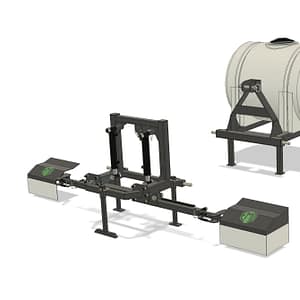
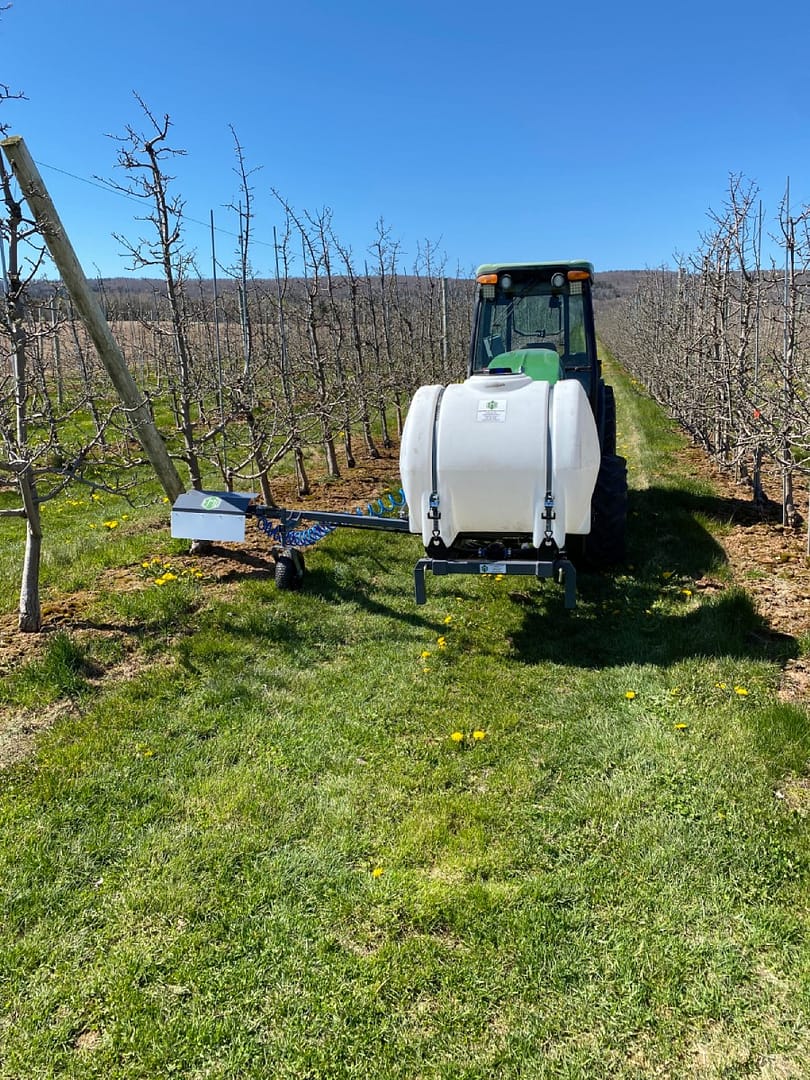
If you’re thinking about a herbicide boom sprayer for your orchard, explore our options. With features like adjustable reach and individual boom control, you’ll get the precision you require.
Click here to learn more about herbicide boom sprayers, or contact us to discuss the best sprayer for your tractor and agricultural needs.
FAQ
- What factors should I consider when selecting a sprayer for my tractor?
- When selecting a tractor sprayer, key factors to consider include your field size, crop type, terrain conditions, and row spacing. Additionally, ensure compatibility with your tractor’s hitch type and consider whether a front or rear mount best suits your needs.
- How do herbicide boom sprayers differ from other types of sprayers?
- Herbicide boom sprayers are designed for precision application, using multiple nozzles along a boom to evenly distribute chemicals over large areas. They provide consistent coverage and control, making them ideal for applications that require uniform distribution, such as herbicide spraying in orchards.
- What are the advantages of using a front-mount herbicide boom sprayer?
- Front-mount herbicide boom sprayers offer improved visibility, making it easier to monitor the application and adjust as needed. They also allow for better manoeuvrability and quicker hookup times, which can be beneficial in orchards and other settings with tight spaces or obstacles.
- Can I use a boom sprayer on uneven terrain?
- Yes, boom sprayers can be used on uneven terrain, but it’s important to ensure that the sprayer has adjustable boom heights and sturdy construction to handle ruts and inclines. For particularly rough terrain, a boomless sprayer may be a more suitable option, as it can provide coverage without the risk of booms getting caught.
- How do I maintain a herbicide boom sprayer to ensure it lasts?
- Regular maintenance is key to prolonging the life of a herbicide boom sprayer. This includes cleaning the nozzles to prevent clogs, checking for leaks, and inspecting the pump and hoses for wear. Proper storage and winterization are also significant to protect the sprayer from weather-related damage. For a comprehensive guide, visit our article on Maximizing Efficiency: Tips for Cleaning and Maintaining Your Herbicide Sprayer.


0 Comments