



A sprayer that’s out of calibration doesn’t just waste herbicide. It can leave weeds untreated, increase spray drift, raise operating costs, and require additional applications later in the season.
Fortunately, sprayer calibration isn’t complicated. A few simple adjustments can improve spray coverage, reduce chemical waste, and help every application perform as intended.
Whether you’re maintaining orchard rows, vineyards, or other specialty crops, this guide explains the most important steps for improving sprayer performance.
Every sprayer changes over time.
Nozzles wear, pressure regulators drift, pumps lose efficiency, and hoses develop small leaks. Even changing tractors or operating at a different speed can affect your application rate.
Without regular sprayer calibration, you may unknowingly apply too much or too little herbicide. Overapplication wastes money and increases the risk of crop injury or environmental impact, while underapplication often leads to poor weed control and repeat spraying.
Regular calibration helps ensure every pass delivers the intended amount of product exactly where it’s needed.
1. Start With a Complete Equipment Inspection
Before making any adjustments, inspect the entire sprayer.
Look for:
- Leaking hoses or fittings
- Damaged pressure gauges
- Plugged strainers
- Worn pumps
- Cracked nozzles
- Uneven spray patterns
A mechanical problem can make even the best calibration inaccurate.

For seasonal maintenance tips, see Winterizing Sprayers: Simple Steps for Cold-Weather Protection for Your 3-Point Sprayer.
2. Replace Worn Nozzles
Nozzles are one of the most overlooked parts of any sprayer.
Even small amounts of wear change flow rates and droplet size, making accurate boom sprayer calibration nearly impossible.
Choosing the correct sprayer nozzle types also improves performance. Different nozzles are designed for different applications, balancing coverage with drift reduction.
Replacing worn nozzles regularly helps maintain consistent application rates across the entire boom.
Learn more in The $5 Nozzle That Costs You $500: How Worn Tips Drain Efficiency.
3. Verify Your Sprayer Application Rate
One of the most important parts of sprayer calibration is confirming the correct sprayer application rate.
The goal is to apply the recommended amount of herbicide evenly across the treated area.
Application rate depends on several factors, including:
- Nozzle output
- Ground speed
- Spray pressure
- Boom width
Adjusting only one of these variables affects the final application rate, so they should always be considered together.

4. Maintain Consistent Ground Speed
Changing tractor speed changes how much herbicide is applied.
Driving too quickly often reduces coverage, while slower speeds may increase application rates beyond the recommended amount.
Maintaining a consistent speed improves both precision spraying and application accuracy.
Read more in 7 Tips to Prevent Overspray.
5. Set the Correct Boom Height
Proper sprayer boom height is essential for uniform coverage.
A boom that’s too high creates excessive overlap and increases drift.
A boom that’s too low may leave untreated strips between nozzle patterns.
The ideal height depends on nozzle spacing, spray angle, and manufacturer recommendations, but keeping the boom as low as practical while maintaining complete coverage generally produces the best results.
For additional guidance, see 7 3-Point Sprayer Mistakes That Cost You Coverage (And How to Improve Spray Coverage in Minutes).
6. Adjust Spray Pressure Carefully
Pressure influences both droplet size and spray pattern.
Higher pressure produces smaller droplets, which often improve coverage but increase drift potential.
Lower pressure produces larger droplets that reduce drift but may not provide sufficient coverage for every application.
Finding the correct pressure helps balance coverage, efficiency, and drift control.
Learn more in How to Choose 3-Point Sprayer Nozzles.
7. Calibrate for Weather Conditions
Even a perfectly calibrated sprayer performs poorly if weather conditions aren’t suitable.
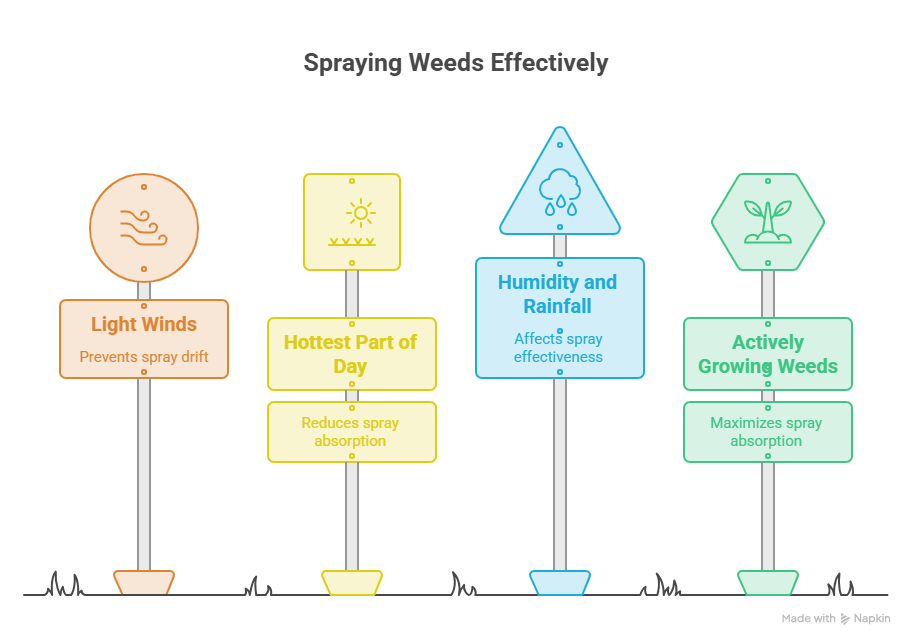
Wind can carry droplets away from the target area, while excessive heat increases evaporation before droplets reach the weeds.
For the best results:
- Spray during light winds.
- Avoid the hottest part of the day.
- Watch humidity and rainfall forecasts.
- Spray actively growing weeds whenever possible.
See Best Time to Spray Herbicide: 7 Critical Weather Conditions for Better Weed Control for a detailed guide.
8. Reduce Drift Through Better Setup
Reducing drift isn’t just about the weather.
Good sprayer setup, proper nozzle selection, correct boom height, and appropriate pressure all contribute to more precision herbicide application.
Small improvements in setup often reduce waste more effectively than increasing chemical rates.
Learn additional techniques in How to Adjust Your 3-Point Boom Sprayer for Uneven Terrain and Obstacles.
9. Keep Calibration Records
Professional growers often record:
- Application rate
- Pressure
- Ground speed
- Weather conditions
- Nozzle type
- Herbicide used
Keeping records makes future tractor sprayer calibration faster and helps identify changes in sprayer performance before they become expensive problems.

Sprayer Calibration Is an Ongoing Process
Calibration isn’t something you do once and forget.
Changes in nozzles, tractors, pumps, field conditions, and products all affect performance. Checking your calibration throughout the season helps maintain accurate applications and reduces unnecessary herbicide costs.
A properly calibrated sprayer improves spray coverage, increases efficiency, and helps every application deliver better results.
Upgrade Your Spraying Equipment
Proper calibration starts with reliable equipment.
At Eastern Manufacturing & Design, we build durable 3-point sprayers designed for consistent performance, easy adjustment, and dependable operation in orchards and specialty crop operations.
Whether you’re replacing an older sprayer or expanding your equipment fleet, we’re here to help you achieve more accurate applications with equipment built to last.


0 Comments