



If your sprayer isn’t performing the way it should, there’s a good chance the problem starts with the pump.
A sprayer pump not working properly can show up in a lot of ways—low pressure, uneven spray, or sometimes no spray at all. And when that happens, it’s not just frustrating—it can cost you time, chemicals, and crop protection during critical windows.
The good news is that most pump issues don’t happen overnight. They usually give you warning signs first. If you know what to look for, you can catch the problem early and fix it before it turns into a full breakdown.
Let’s walk through the most common sprayer pump problems, what causes them, and how to deal with them.
A nozzle issue is a cheap fix, but not fixing it can cost you. Read The $5 Nozzle That Costs You $500: How Worn Tips Drain Efficiency.
Why Sprayer Pump Issues Matter
Your pump is doing the heavy lifting every time you spray. It controls pressure, flow, and how evenly your chemicals are applied.
When it starts to fail, everything else starts to fall apart too. You might notice your spray pattern getting inconsistent, certain areas getting too much product while others get none, or your system just not performing like it used to.
That’s why a little sprayer pump troubleshooting can go a long way. Catching issues early helps you avoid wasted chemicals, uneven coverage, and downtime when you can least afford it.
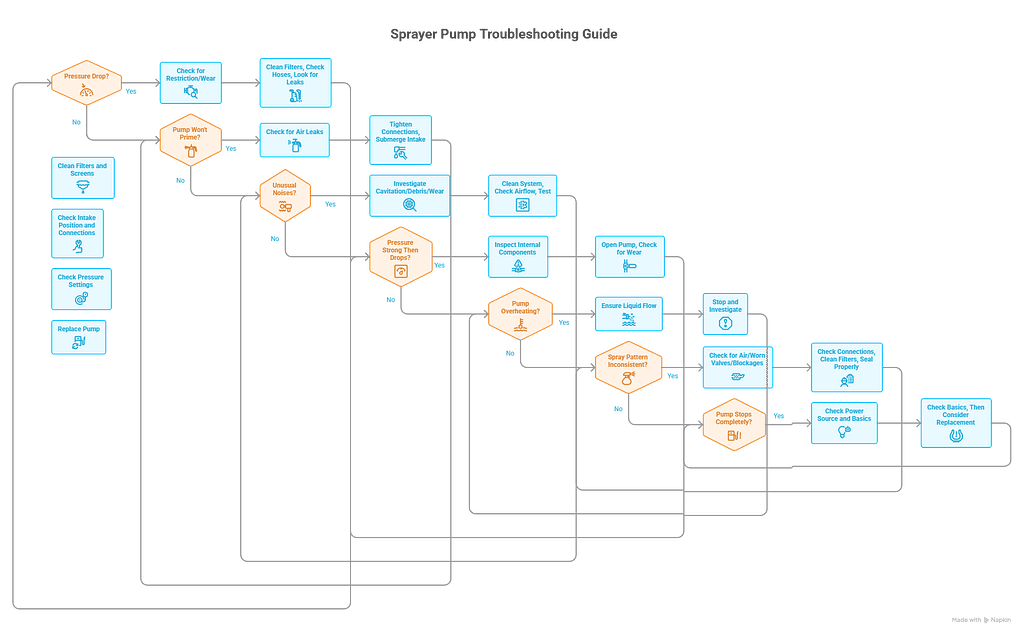
1. You’re Losing Pressure
One of the first things most operators notice is a drop in pressure. Maybe your spray isn’t reaching as far, or your nozzles are barely putting anything out.
This usually points to a restriction somewhere in the system or wear inside the pump itself. Filters and screens are often the first place to check—if they’re clogged, flow gets restricted quickly. Air leaks in the suction line or worn seals can also cause pressure to drop.
Start simple. Clean your filters, check your hoses, and look for any obvious leaks. If everything looks good and the problem continues, it may be time to inspect internal pump components.
Many sprayer issues can be avoided with proper maintenance. Take a look at Step-by-Step 3-Point Sprayer Maintenance: Preventing Clogs and Damage for more information.
2. The Pump Won’t Prime
If the pump is running but nothing is coming out, you’re likely dealing with a priming issue. This is a classic case of a sprayer pump not working even though it sounds like it is.
In most cases, the issue is air getting into the system. That could be from a loose fitting, a cracked hose, or a suction line that isn’t fully submerged.
Make sure your intake is properly positioned in the tank and that all connections are tight. Even a small air leak can prevent the pump from pulling liquid the way it should.
3. You Hear Unusual Noises
A healthy pump should run fairly smoothly. If you start hearing whining, grinding, or rattling sounds, something isn’t right.
This often comes down to cavitation (that’s air bubbles forming in the liquid and collapsing inside the pump) or debris making its way into the system. It can also mean internal parts are starting to wear out.
If you hear something unusual, don’t ignore it. Check for airflow issues, clean the system, and then run a test to check for issues. Catching this early can prevent more serious damage.
4. Pressure Starts Strong, Then Drops
Sometimes the system works fine at first, then gradually loses pressure as you continue spraying. This is one of the more frustrating sprayer pump losing pressure problems because it doesn’t show up right away.
In many cases, this points to worn internal parts like diaphragms or seals that can’t maintain consistent pressure under load. Overheating can also play a role here.
If you’re seeing this pattern, it’s worth opening up the pump and checking for wear. Replacing a few components early is much easier than dealing with a full failure later.
5. The Pump Is Overheating
If your pump is getting hot quickly, that’s a red flag.
Pumps rely on liquid flow to stay cool. If they’re running dry they can heat up fast and start damaging internal parts, even if it’s only briefly. Running at excessive pressure can also put extra strain on the system.
Make sure there’s always liquid in the system before you start spraying, and double-check your pressure settings. If something feels off, stop and investigate before continuing.
6. Your Spray Pattern Is Inconsistent
If your spray output is pulsing or uneven, that’s usually a sign the pump isn’t delivering steady pressure. This is a common low pressure sprayer problem that shows up directly in your field results.
You might see streaking, missed spots, or uneven coverage across rows.
Air in the system is often the culprit here. It can also be caused by worn valves or partial blockages in the intake line.
Go through your system step by step. Check connections, clean filters, and make sure everything is sealed properly. Remember: consistency in pressure leads to consistency in coverage.
7. The Pump Stops Working Completely
In the worst-case scenario, the pump just stops.
At this point, there’s no pressure, no spray, and no output at all. This could be due to severe internal damage, worn-out components, or even issues with the PTO or electrical system, depending on your setup.
Before assuming the pump is done, check the power source, connections, flow, and other basics. But if everything checks out and it still won’t run, replacement may be the most practical option.
What Causes Most Sprayer Pump Problems?
When you step back and look at it, most sprayer pump problems come down to a handful of common issues.
Lack of maintenance is a big one. Debris in the system is another. Running the pump dry can cause lasting damage, even if it just happens once. And over time, normal wear on seals and internal parts will catch up if they’re not replaced.
The key is staying ahead of these issues instead of reacting to them.
Another big cause of sprayer or other equipment failure: winter freeze. Check out Winterizing Sprayers: Simple Steps for Cold-Weather Protection for Your 3-Point Sprayer to learn more.
How to Keep Your Pump Running Strong
A little routine maintenance goes a long way.
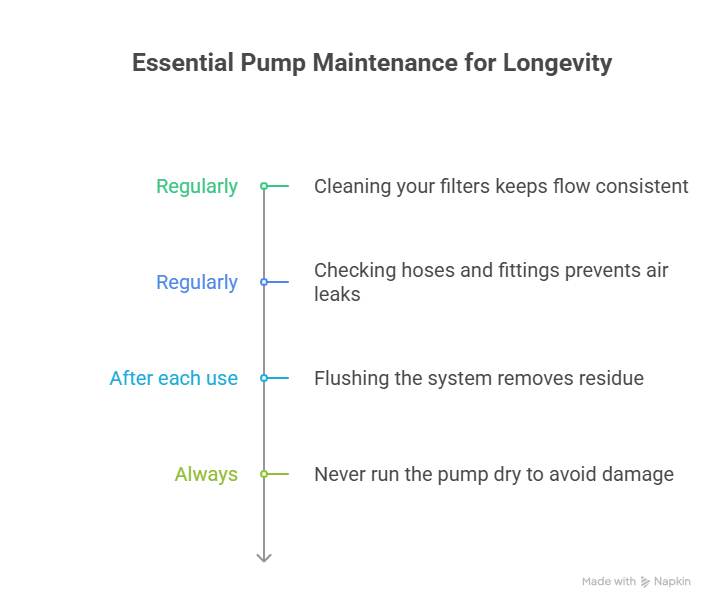
Cleaning your filters regularly keeps flow consistent. Checking hoses and fittings helps prevent air leaks. Flushing the system after each use keeps residue from building up inside the pump.
And maybe most importantly… never run the pump dry. It’s one of the fastest ways to shorten its lifespan.
If you stay on top of these basics, you’ll avoid most of the common issues that lead to a sprayer pump not working.
Repair or Replace?
At some point, every operator runs into this question.
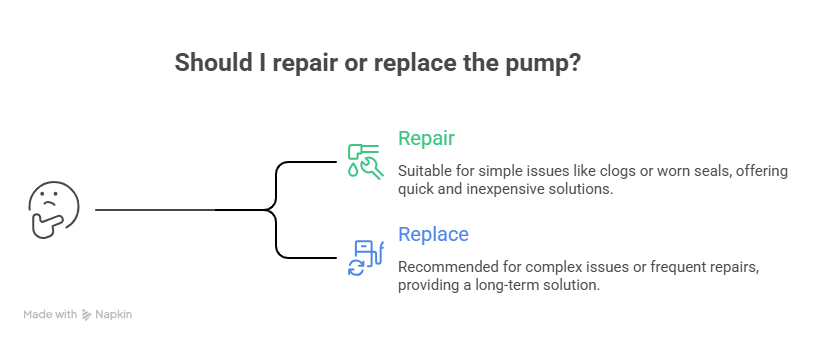
If the issue is something simple, it’s usually worth repairing. Fixing a clog, a worn seal, or a loose fitting is quick and inexpensive.
But if the pump is showing multiple issues, struggling to maintain pressure, or requiring constant repairs, replacement may be the better long-term choice.
Final Thoughts
At Eastern Manufacturing, we know that a sprayer pump not working can throw off your entire operation, but it rarely happens without warning.
If you pay attention to changes in pressure, sound, and spray performance, you can catch most problems early. That means less downtime, less wasted product, and better results in the field. Not only that, a working sprayer pump makes it easier to spray safely.
Like most equipment on the farm, it comes down to maintenance and awareness. Take care of your pump, and it’ll take care of your spraying.
If you’re looking for equipment that will hold up under tough conditions, reach out to us today.



0 Comments